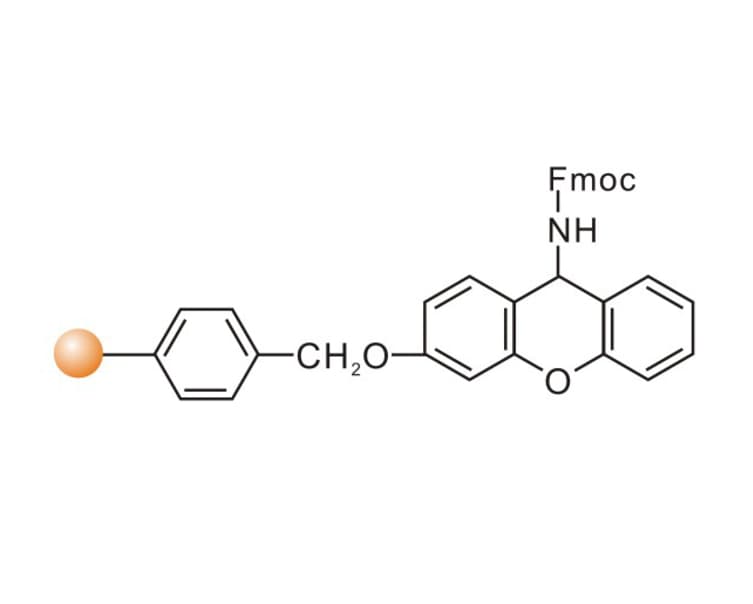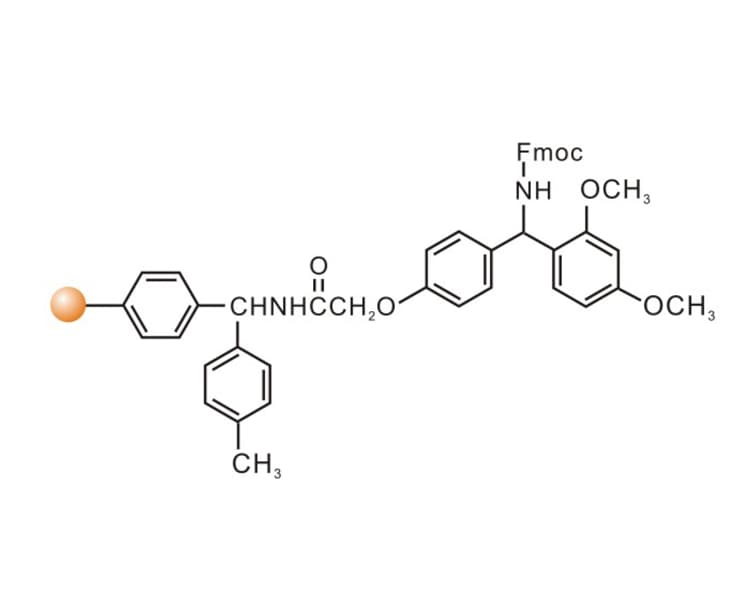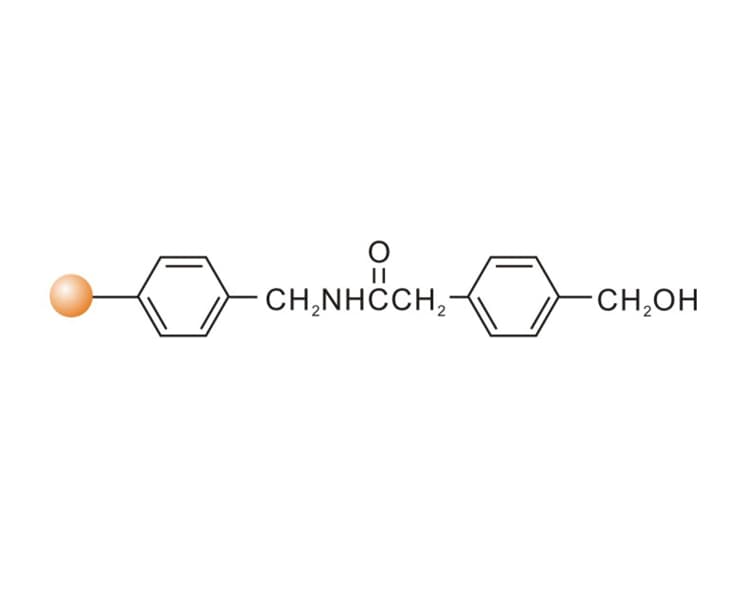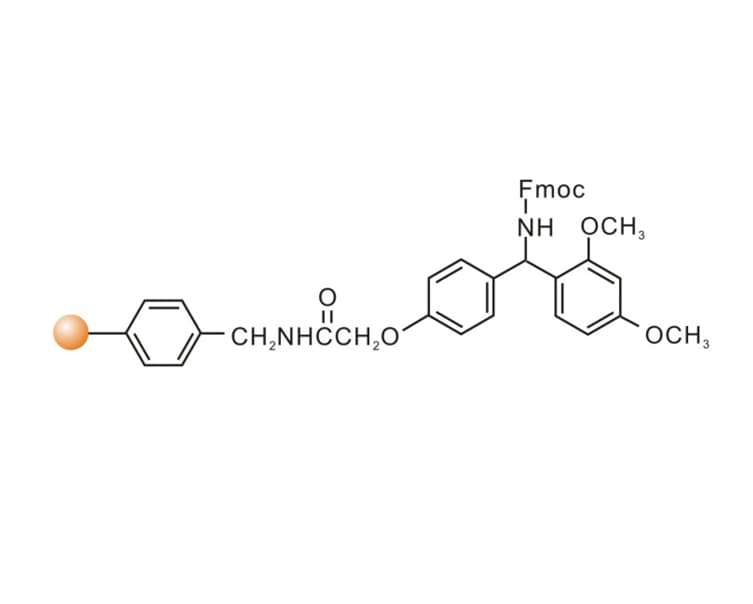

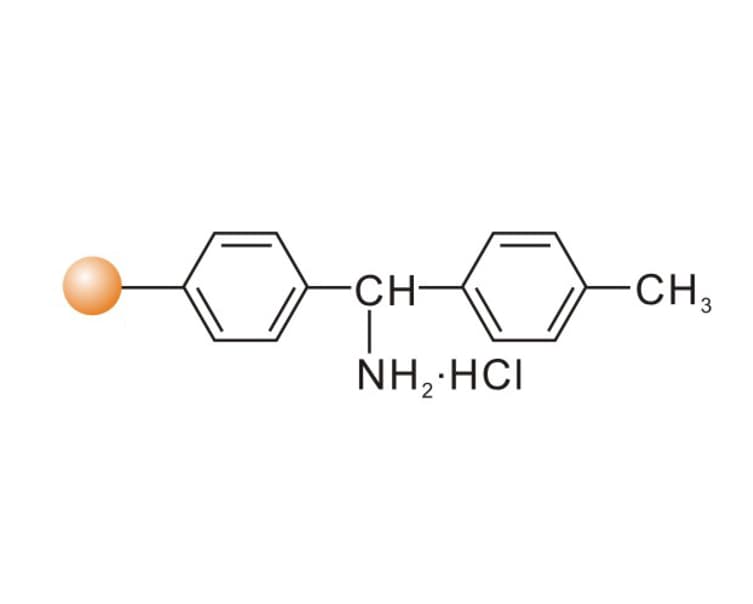
MBHA resin is widely used in the solid-phase synthesis of peptides and amides in BOC chemistry. Its characteristics and key points of use are as follows: Acid sensitivity optimization: Compared to traditional BHA resin, MBHA resin exhibits higher sensitivity to acid (with milder cleavage conditions), but it is important to note that strong acidic reagents (such as high-concentration TFA) should be avoided during the synthesis process, as they may cause the linker to partially detach. It is suitable for synthesis strategies compatible with acid-sensitive protecting groups (such as Boc). Advantages in swelling performance:
Its excellent swelling property (especially in solvents such as DCM and DMF) makes it an ideal carrier matrix for linker arms in combinatorial synthesis, facilitating solid-liquid mass transfer and reaction homogeneity. Cleavage conditions: hydrofluoric acid (HF) (requiring a dedicated fluorine-resistant reactor), trifluoromethanesulfonic acid (TFMSA), tetrafluoroboric acid/thioanisole (TFB/Thioanisole), and scavenger system: used in conjunction with m-cresol and ethanedithiol (EDT) to inhibit side reactions. This resin is particularly suitable for the synthesis of peptides containing C-terminal amide modifications and the construction of complex modified peptide chains.
产品编号 Product No. | 交联度(%) %DVB | 粒径(目) ParticleSize(mesh) | 基团负载(mmol/g) | 膨胀体积SwellingVolume (inDCM,ml/g) |
| HXDD009-0103 | 1% | 100-200 | 0.4-0.6 0.6-0.8 0.8-1.0 1.0-1.2 1.2-1.4 1.4-1.6 | 8-10 |
| HXDD009-0203 | 2% | 100-200 | 6-8 | |
| HXDD009-0104 | 1% | 200-400 | 8-10 | |
| HXDD009-0204 | 2% | 200-400 | 6-8 | |
We are committed to providing advanced laboratory and research services that meet the highest standards of quality and precision.

Copyright © 2026 Yantai Shenghua Biotechnology Co., Ltd.