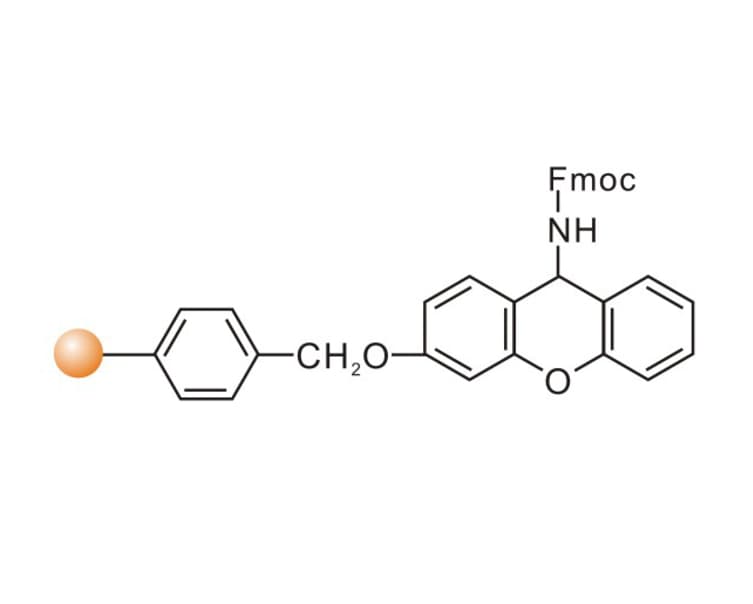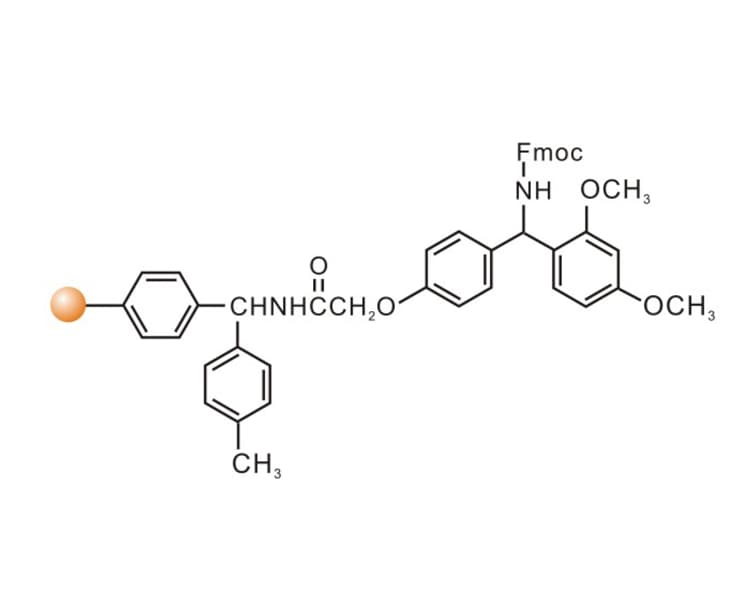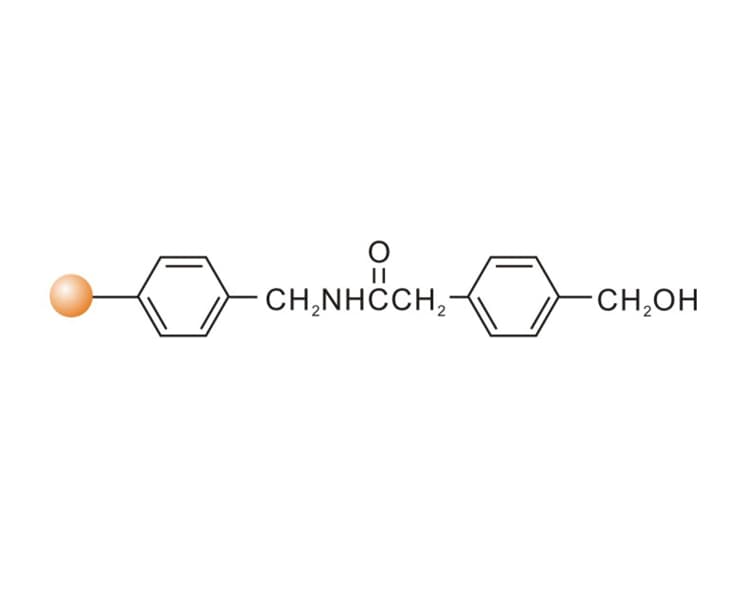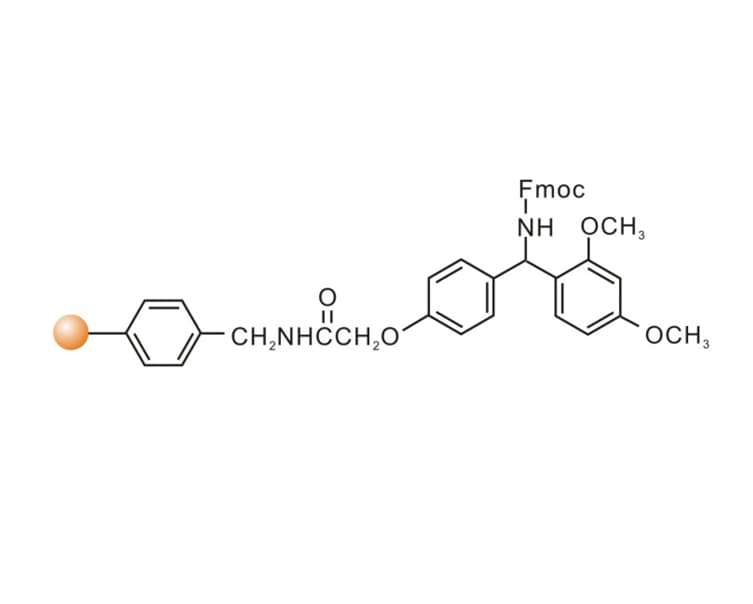

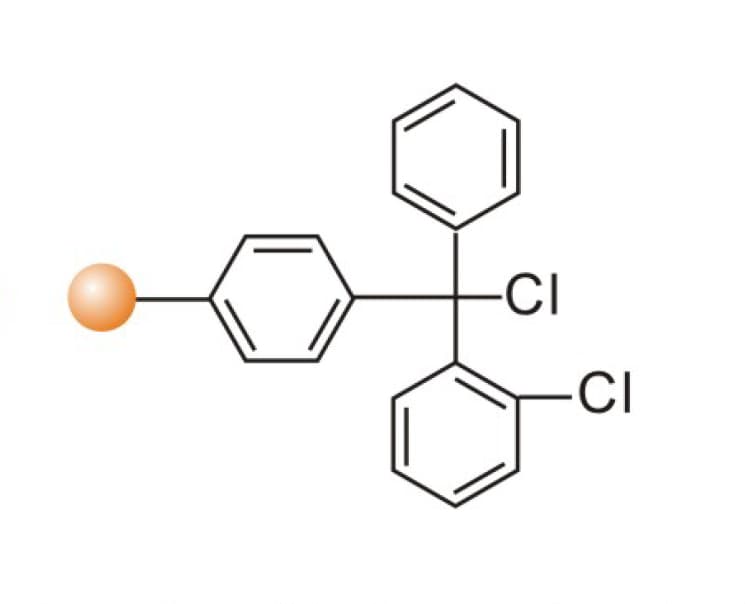
2-Chlorotrityl Resin is a highly acid-sensitive support, particularly suitable for the synthesis of protected peptides (especially C-terminal proline and cysteine peptides) via the Fmoc strategy. This resin is also especially suitable for the preparation of peptidols.
The cleavage reaction can be conducted under the following conditions: acetic acid (AcOH)/trifluoroethanol/DCM, 0.5% trifluoroacetic acid (TFA), 1-5% TFA containing 5% triisopropylsilane (Tis)/DCM, hexafluoroisopropanol/DCM. Compared to alkoxybenzyl alcohol linkers (such as Wang resin), the trityl linker exhibits unique advantages in peptide chemistry. It avoids racemization issues during the loading of the first amino acid: when loading the first amino acid onto the trityl linker, its steric hindrance effectively inhibits racemization, enhancing the stereoselectivity of peptide synthesis. Acid sensitivity is controllable: a relatively low acid concentration (0.5%-5% TFA) is sufficient to cleave the linker bond, making it suitable for the synthesis of complex peptides that are sensitive to strong acids.
| 产品编号Product No. | 交联度(%) %DVB | 粒径(目) Particle Size (mesh) | 基团负载量(mmol/g) | 膨胀体积 Swelling Volume(in DCM, ml/g) |
| HXDD007-0103 | 1% | 100-200 | 0.4-0.6 0.6-0.8 0.8-1.0 1.0-1.2 1.2-1.4 1.4-1.6 | 8-10 |
| HXDD007-0203 | 2% | 100-200 | 6-8 | |
| HXDD007-0104 | 1% | 200-400 | 8-10 | |
| HXDD007-0204 | 2% | 200-400 | 6-8 | |
We are committed to providing advanced laboratory and research services that meet the highest standards of quality and precision.

Copyright © 2026 Yantai Shenghua Biotechnology Co., Ltd.