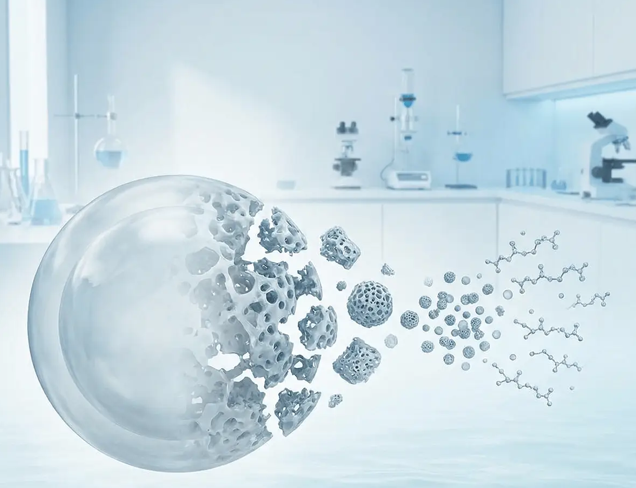

Microspheres, with their diverse functional characteristics, are widely applied in niche scenarios such as coatings, plastics, building materials, and oil fields, driving quality improvement and efficiency enhancement in traditional industries and giving birth to new functional materials

In the fields of new materials and industrial manufacturing, microspheres, with their diverse functional characteristics, are widely applied in niche scenarios such as coatings, plastics, building materials, and oil fields. They drive the quality improvement and efficiency enhancement of traditional industries and give birth to new functional materials.
In the field of coatings and plastics, microspheres can serve as functional fillers to enhance the overall performance of products. For instance, incorporating hollow microspheres into coatings can reduce their density, improve their heat insulation, sound insulation, and scratch resistance, while also reducing the amount of coating required, thus achieving energy conservation and environmental protection. Adding microspheres to plastics can enhance their toughness, wear resistance, and processing properties, making them suitable for the production of lightweight, high-strength automotive components, electronic housings, and other products, thereby facilitating the development of the automotive industry towards lightweight and energy-efficient solutions.
In the field of architecture and building materials, the application of microspheres focuses on energy conservation and environmental protection. Hollow glass microspheres can be used to prepare lightweight insulation mortar, insulation boards, etc. With their excellent thermal insulation properties, they can reduce building energy consumption and realize the concept of green buildings. In addition, microspheres can also be used to modify concrete, enhancing its strength, crack resistance, and durability, thereby extending the service life of buildings. In the field of oilfield exploration, microspheres can serve as plugging agents and oil displacement agents. By precisely plugging high-permeability layers in oil wells, they can improve the flow path of crude oil, enhance oil recovery, reduce extraction costs, and facilitate efficient oilfield development.
We are committed to providing advanced laboratory and research services that meet the highest standards of quality and precision.

Copyright © 2026 Yantai Shenghua Biotechnology Co., Ltd.