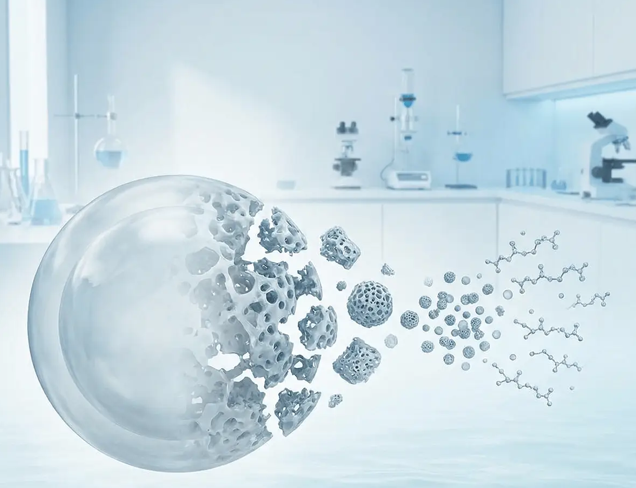
Specializing in membrane emulsification technology and uniform microsphere preparation equipment, with batch deviation of ≤5%, it saves 40% of raw and auxiliary materials, eliminates the need for secondary screening, and is suitable for chemical, pharmaceutical, cosmetics, and other fields. It provides a green and efficient solution to the pain points of traditional processes.
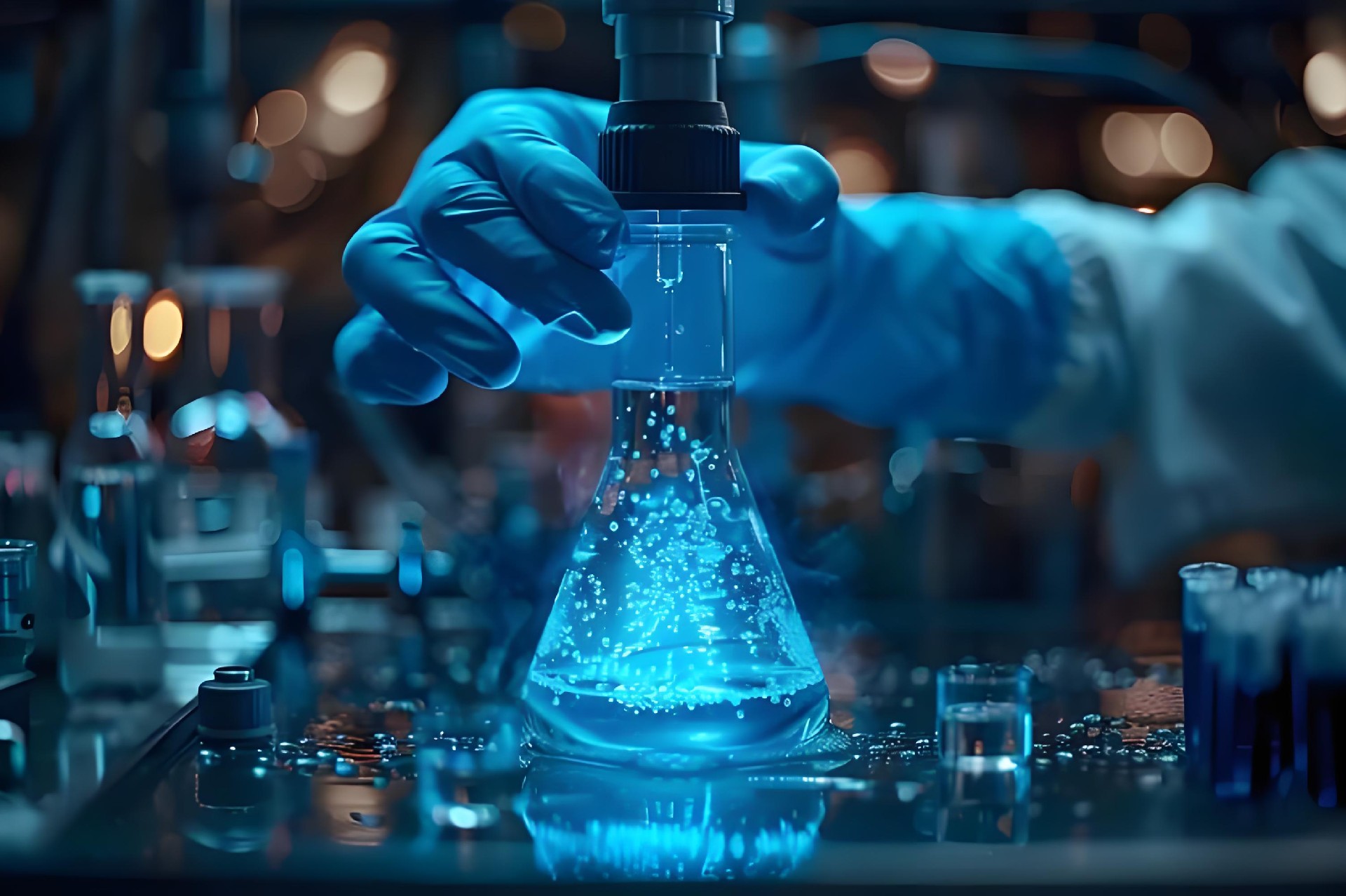
Membrane emulsification technology: Addressing the pain points in the preparation of uniform microspheres, empowering innovation across multiple fields
In the fields of chemical engineering, pharmaceuticals, cosmetics, etc., the uniformity of particle size of microspheres directly determines product stability, application effect, and batch reproducibility. Traditional preparation methods such as mechanical dispersion and spraying generally suffer from issues such as high energy consumption, low yield, and wide particle size distribution, which not only result in raw material waste but also hinder structure-activity relationship research and even trigger unpredictable adverse reactions. The emergence of membrane emulsification technology has overcome the technical bottleneck in the preparation of high-end uniform microspheres, and with its core advantages of green efficiency, stability, and controllability, it has become the preferred solution for industry upgrading.
1. Core Advantages: Reconstructing the Efficiency and Quality of Microsphere Preparation
1. Reduce costs through green initiatives and simplify processes
Traditional methods require the addition of 2~10 wt% high-concentration emulsifier to maintain the stability of the lotion, whereas membrane emulsification technology, leveraging the uniform stability of the prepared lotion, only needs 1~1.5 wt% emulsifier to meet the demand. This not only reduces the use of organic reagents but also decreases the frequency of post-cleaning and the cost of "three wastes" treatment. Additionally, the membrane emulsification process is mild, generates little heat, and causes minimal loss of active substances, saving 40% of raw and auxiliary materials. Furthermore, it eliminates the need for secondary screening and screen mesh cleaning and regeneration processes, significantly simplifying the process and further reducing production costs.
2. Batch stability and scaled-up compatibility
In large-scale production, the issue of particle size repeatability is particularly prominent with traditional methods. However, membrane emulsification technology, through precise control of core parameters, can control the standard deviation of particle size between batches to below 5%, providing reliable support for scaled-up production. Its stable preparation system can effectively avoid quality fluctuations caused by batch differences, meeting the stringent requirements of industries such as chemical and pharmaceuticals for large-scale production.
3. Precise diameter control facilitates structure-activity relationship studies
Uneven particle size can lead to disordered distribution of microspheres in the body, significant fluctuations in experimental results, and affect drug release speed and in vivo absorption. Microspheres prepared by membrane emulsification technology have uniform particle size, providing an ideal carrier for structure-activity relationship studies. Whether it is for immunological effect research or drug carrier development, it can significantly improve the accuracy and reliability of experimental data, laying the foundation for product optimization.
II. Technical Analysis: Two Core Paths to Meet Different Needs
Membrane emulsification technology is primarily categorized into direct membrane emulsification and rapid membrane emulsification, covering various production scenarios as needed:
Direct membrane emulsification technology: The dispersed phase slowly permeates through the membrane pores under the action of gas pressure, and the emulsion droplets grow uniformly at the exit of the membrane pores due to drag force, buoyancy, interfacial tension, etc., with the final particle size being 2 to 10 times the size of the membrane pores. This method features a mild preparation process and precise particle size control. Hydrophilic membranes are used for O/W emulsions, while hydrophobic membranes are used for W/O emulsions, but the flux is relatively low (0.01 to 0.1 m³/(m²·h)), making it suitable for scenarios where high particle size accuracy is required.
Rapid membrane emulsification technology: First, prepare a pre-emulsion through conventional methods such as mechanical stirring. Then, rapidly press it through the membrane pores with high-pressure nitrogen gas, utilizing the pressure to deform and break large droplets, forming uniform microspheres with a particle size of 1/3 to 1/2 of the membrane pore diameter. This method significantly improves efficiency, with a flux greater than 1 m³/(m²·h), and is suitable for batch production needs.
Membrane emulsification technology, characterized by its green efficiency, stability, and controllability, is being widely applied in various fields such as chemical engineering, pharmaceuticals, electronics, and cosmetics. Whether it's laboratory research and development seeking ultimate precision or large-scale industrial production, this technology can precisely control the particle size of microspheres, addressing traditional process pain points and injecting new impetus into product upgrades and technological innovation. As the technology continues to mature, membrane emulsification is bound to become the mainstream choice for uniform microsphere preparation, propelling related industries towards a higher quality development stage.
We are committed to providing advanced laboratory and research services that meet the highest standards of quality and precision.

Copyright © 2026 Yantai Shenghua Biotechnology Co., Ltd.